From Acorn To Oak
The Jesuits
Campion School traces its origins to the distinguished educational tradition of the Society of Jesus, commonly known as the Jesuits.
Founded in 1540 by Ignatius of Loyola, the Jesuit order emerged as one of the most influential religious and intellectual movements in the history of education.
From its earliest years, the Society of Jesus recognized education as a powerful instrument for the formation of both mind and character.
Guided by its motto Ad Majorem Dei Gloriam ("For The Greater Glory Of God") - Jesuit education rests upon the conviction that every pursuit of knowledge, every intellectual endeavor,
and every act of service should ultimately contribute to the greater glory of God.
Within this vision, education is not confined merely to the acquisition of knowledge. Rather, it seeks the holistic formation of the individual—cultivating intellectual excellence, moral integrity, disciplined character,
and a deep commitment to service. Jesuit institutions across the world have long striven to nurture men and women who combine academic distinction with compassion, leadership, and a sense of responsibility toward society.
The extraordinary influence of the Jesuits in the realm of education has been widely acknowledged. The British historian Thomas Babington Macaulay famously described them as “the schoolmasters of Europe,”
recognizing the order as one of the most disciplined, intellectually formidable, and effective educational organizations in history.
The Jesuit educational mission in India began at a remarkably early date. In 1542, the Jesuits established St. Paul’s College in Goa, one of the earliest centres of higher learning in Asia.
Over the centuries that followed, the Society went on to found several renowned institutions across the country, including
St. Joseph’s College, Tiruchirappalli (1844), St. Xavier's College, Kolkata (1869), St. Joseph’s College, Bangalore (1882), and
Loyola College, Chennai (1925).
In Bombay, the Jesuits created an equally significant educational presence.
Their institutions included St. Mary’s School, Mazagaon (1852), St. Stanislaus High School, Bandra (1863),
St. Xavier’s College, Fort (1869), St. Xavier’s High School, Fort (1869), and
St. Xavier’s Technical Institute, (1934).
It was within this rich tradition of holistic development that Campion School would later find its place.
Bombay In The 1940s
By the 1940s, Bombay had become India’s leading commercial capital. With its natural harbour, a booming cotton and textile industry, an expanding railway network, etc, the city grew into an industrial powerhouse,
with rising Indian business houses and the Bombay Stock Exchange at the heart of its financial dominance.
The city’s cosmopolitan fabric included a large Consular Corps and numerous foreign commercial houses, predominantly European.
It would be safe to assume that many among them were themselves alumni of Jesuit institutions and so familiar with Jesuit education and its focus on the holistic formation of the person - mind, body, and spirit
The Seed Is Sown
 It was therefore hardly surprising that in the early 1940s, Fr Joseph Savall SJ then Principal of St Mary’s School, Mazagaon, was approached by members of the Consular Corps and foreign nationals living in Bombay.
They sought the establishment of a school exclusively for their children - one that would provide an education consistent with international standards while rooted in the trusted Jesuit ethos.
It was therefore hardly surprising that in the early 1940s, Fr Joseph Savall SJ then Principal of St Mary’s School, Mazagaon, was approached by members of the Consular Corps and foreign nationals living in Bombay.
They sought the establishment of a school exclusively for their children - one that would provide an education consistent with international standards while rooted in the trusted Jesuit ethos.
Around the same time, the Jesuits were receiving requests from royal families to establish an institution that would provide a sound, all-round education rooted in strong values for their children.
Thus, was born the idea of Campion School.
Cooperage Road
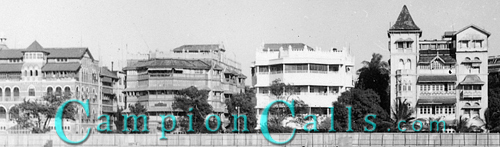 In 1942, the Jesuits purchased Wellesley House on Cooperage Road to house the new school.
However, resistance from the tenants delayed possession of the building.
In 1942, the Jesuits purchased Wellesley House on Cooperage Road to house the new school.
However, resistance from the tenants delayed possession of the building.
As a result, Campion began modestly in rented premises at New Marine Lines a km away.
The New Marine Lines Era
On 20 January 1943 Campion School opened its doors at 45 New Marine Lines. Four dedicated members of staff welcomed twenty-three young scholars under the leadership of the founding Principal, Fr Joseph Savall SJ.
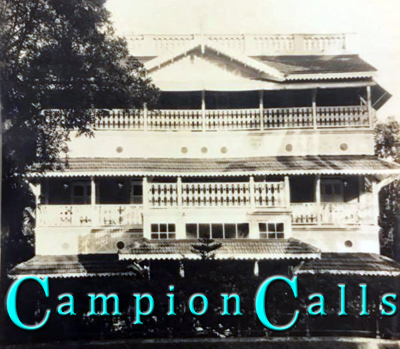 The property, described by Sir Dinshaw Petit as an old colonial bungalow with a light green verandah, provided the setting for the school’s modest beginnings with limited space and facilities , but it quickly developed a reputation for academic excellence and discipline under Jesuit leadership
Within a year of its inception, the Department of Education granted Campion official recognition under the Code of European Schools. The school was initially permitted to teach up to Class IV, with approval
to add a class each year until the highest form was reached.
Even in it’s very first year, Campion made it clear that education within its walls would extend far beyond textbooks.
Dramatics quickly became a vibrant expression of the school’s character. Within months of its founding, students staged The Theft of the Crown Jewels, signalling a commitment to nurturing imagination, confidence, and self-expression.
The tradition continued to flourish with subsequent productions such as The King and The Astrologer and The Microbe Man, establishing the performing arts as an enduring and integral part of school life.
At the same time in keeping with the Jesuit ideal of holistic education, equal emphasis was placed on character formation through the Scout movement, introduced by Fr Savall SJ in 1944.
That same year the boys embarked on their first Scout camp to Khandala, where adventure blended with discipline and fellowship.
By 1945, the Scout Troop had grown to four patrols, reflecting the movement’s popularity and impact.
A notable moment in these formative years was the inspection of the Scouts and Cubs by Sir John Colville, former Viceroy and Governor-General of India and then Governor of the Province, an occasion that brought public recognition to the young institution.
Sport also began to claim its place in Campion’s identity. In 1947, the school entered inter-school cricket, playing matches against Mohamed Baig High School, Cathedral School, and St. Xavier’s School.
These early fixtures laid the foundation for a proud sporting tradition, reinforcing teamwork, discipline, and school spirit. Together, dramatics, scouting, and sport shaped the well-rounded formation that would become a hallmark of Campion’s legacy.
Back Home To Wellesley House
In 1942, the Jesuits purchased Wellesley House on Cooperage Road to house the new school.
On July 12, 1948, Campion finally moved into its permanent home at Wellesley House on Cooperage Road,
though initially only the ground floor was available.
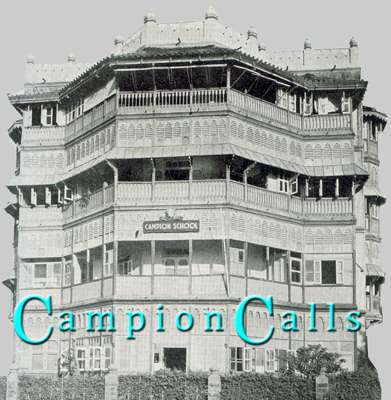 Fr Savall SJ, organised a grand housewarming ceremony.
The occasion was graced by His Lordship Valerian Gracias, Auxiliary Bishop of Bombay. Among the distinguished guests were the Father Superior and the Principals of St. Xavier's College and St. Mary's School,
along with several other well-wishers and members of the education community.
Fr Savall SJ, organised a grand housewarming ceremony.
The occasion was graced by His Lordship Valerian Gracias, Auxiliary Bishop of Bombay. Among the distinguished guests were the Father Superior and the Principals of St. Xavier's College and St. Mary's School,
along with several other well-wishers and members of the education community.
In late October 1948, Fr Savall SJ organised a school picnic to Elephanta Island. The outing offered students an opportunity for recreation and fellowship beyond the classroom,
strengthening bonds within the growing Campion community.
In December, the school held its Annual Sports Day at the neighbouring Cooperage Football Ground, inaugurating what would become a cherished tradition of athletic excellence.
The year concluded with the Annual Prize Day ceremony, presided over by Mr. and Mrs. Kanga, the Director of Industries, in recognition of academic and co-curricular achievement.
In 1949, Campion faced a poignant moment in its early history. Fr Savall's SJ health began to decline, and he returned to his native Spain. His departure marked the end of a formative chapter.
As founding Principal, Fr Savall SJ had guided the school through its fragile beginnings, overseen its growth, secured official recognition, established traditions in scouting, drama, and sport,
and led it into its permanent home at Wellesley House.
His vision, dedication, and pastoral care laid the foundations upon which future generations would build.
Transition and Expansion under Fr R Conesa SJ
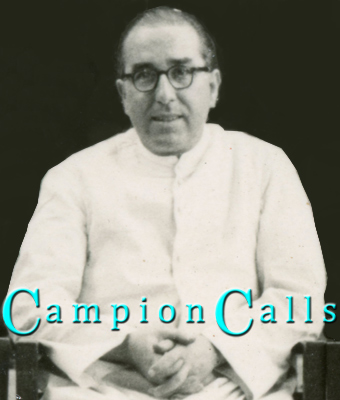 On June 4, 1949,Fr R Conesa who was then
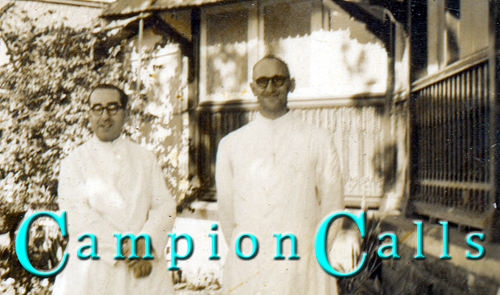
serving as Director of the St. Xavier’s Technical Institute, assumed charge of Campion. His appointment marked the beginning of a period of energetic expansion and consolidation.
On June 4, 1949,Fr R Conesa who was then
serving as Director of the St. Xavier’s Technical Institute, assumed charge of Campion. His appointment marked the beginning of a period of energetic expansion and consolidation.
With characteristic Jesuit energy and foresight, Fr. Conesa immediately set about strengthening the foundations of the school. He initiated the expansion of Campion into the second and third floors of Wellesley House and
introduced innovations that were ahead of their time.
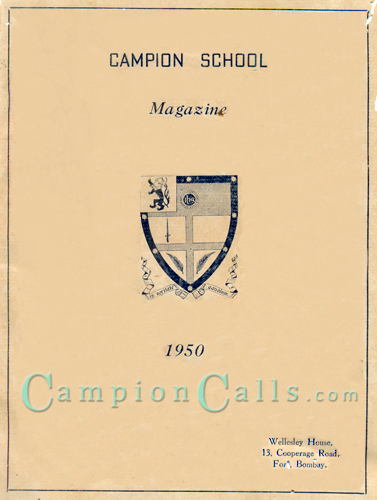 In 1950, Fr. Conesa’s greatest gift and enduring legacy to Campion was the launch of The Campion Magazine.
With an initial print run of 230 copies, it became a voice for the students, a platform for creative expression and remains an important milestone in the school’s history.
In 1950, Fr. Conesa’s greatest gift and enduring legacy to Campion was the launch of The Campion Magazine.
With an initial print run of 230 copies, it became a voice for the students, a platform for creative expression and remains an important milestone in the school’s history.
And introduced innovations that were ahead of their time. The purchase of a projector and the installation of a permanent cinema screen brought modern audio-visual learning into the school -
an exciting development in an era when such facilities were rare.
The school library was also expanded, reflecting his commitment to academic enrichment.
 That year, Sports Day and Prize Day were celebrated at the St. Xavier’s College Gymkhana at Parel. The event was presided over by Don Juan Francisco Guadilon, Consul for Spain, adding distinction to the occasion.
However, managing two institutions simultaneously proved demanding. So,
Fr. Conesa SJ handed over Campion to Fr. Emmanuel More SJ
a young Spanish Jesuit from Barcelona.
The Golden Era of Fr Emmanuel More SJ
 In January 1951, Fr Emmanuel More SJ formally assumed leadership of Campion School.
Under his stewardship, the school flourished, and many regard him as the greatest principal in its history.
In January 1951, Fr Emmanuel More SJ formally assumed leadership of Campion School.
Under his stewardship, the school flourished, and many regard him as the greatest principal in its history.
Scouting reached its zenith during his tenure. Fr More served as the General Scout Master, leading the boys by example from the front. Under his inspired leadership, the troops achieved remarkable distinction
and the spirit of discipline, service and camaraderie he fostered left an enduring legacy.
Parents’ Day parades at Campion School became spectacular highlights of the school calendar, drawing admiration and pride from students, parents, and staff alike.
The Parents’ Day Parades at Campion School truly became legendary. For many in Bombay, they were the schoolboy equivalent of the grand spectacle at Delhi’s Republic Day Parade.
Perfectly synchronized marching, crisp commands, gleaming uniforms, the huge scout band, and the charged silence before inspection — it wasn’t just a school function. It was theatre. It was discipline. It was pride on parade.
Don’t believe? See for yourself. Visit the Parades page.
 Fr More SJ initiated a series of measures to modernize the school’s infrastructure and administration. Student amenities and academic resources were also strengthened. A Blue Star water cooler was installed,
class libraries were introduced to encourage wider reading, and the school office was equipped with a Gestetner duplicator and a portable typewriter to improve efficiency.
The establishment of the Tuck Shop further enriched student life.
Fr More SJ initiated a series of measures to modernize the school’s infrastructure and administration. Student amenities and academic resources were also strengthened. A Blue Star water cooler was installed,
class libraries were introduced to encourage wider reading, and the school office was equipped with a Gestetner duplicator and a portable typewriter to improve efficiency.
The establishment of the Tuck Shop further enriched student life.
Until the early 1950s, the school relied on buses borrowed from other Jesuit institutions, primarily St. Xavier’s School. In April 1952, Campion purchased its own red-and-white bus for Rs 13,500, marking an important step toward self-sufficiency.
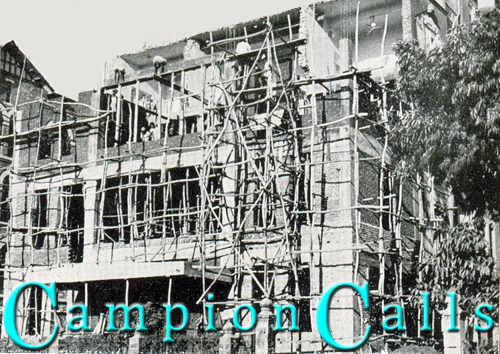
In 1955, Wellesley House underwent major structural renovation, including the addition of a fourth floor
to accommodate growing enrolment. During construction, classes were temporarily held in pandals erected in the Backgarden.
In 1956 Campion attained the status of a full-fledged high school. It received recognition from the University of Cambridge as an A-Certificate School and from the SSC Board, Poona,
firmly establishing its academic standing at both international and regional levels.
After serving at the helm of affairs and being the architect of a full-fledged high school that became one of the most sought-after institutions, Fr Emmanuel More SJ
was sent to Bhopal where he set-up Campion School, Bhopal in 1964.
Fr George Cortes SJ
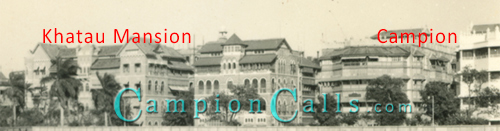 On 1 November 1962, the boys noticed dense smoke billowing from the nearby Khatau Mansion, just two buildings away.
Mr Arthur “Manju” Menezes, who was teaching Class X A at the time, immediately informed Fr Thomas Molina SJ, who was the acting Superior that day, as Fr Emmanuel More SJ was away on a retreat.
On 1 November 1962, the boys noticed dense smoke billowing from the nearby Khatau Mansion, just two buildings away.
Mr Arthur “Manju” Menezes, who was teaching Class X A at the time, immediately informed Fr Thomas Molina SJ, who was the acting Superior that day, as Fr Emmanuel More SJ was away on a retreat.
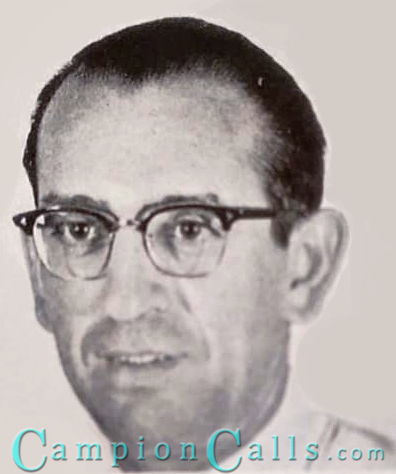 Meanwhile, Fr George Cortes SJ, a young Jesuit in his thirties from Majorca, Spain, had already rushed to the burning building.
He entered it and rescued several elderly residents. After all the residents had come down to safety, those gathered outside heard a dog barking frantically from inside, clearly trapped by the fire.
Without hesitation, Fr Cortes entered the burning building once again.
Meanwhile, Fr George Cortes SJ, a young Jesuit in his thirties from Majorca, Spain, had already rushed to the burning building.
He entered it and rescued several elderly residents. After all the residents had come down to safety, those gathered outside heard a dog barking frantically from inside, clearly trapped by the fire.
Without hesitation, Fr Cortes entered the burning building once again.
When he did not return by 2:45 pm, Mr Menezes, a student named Walter Valles, and a fire officer entered the building, but they could not proceed beyond the second floor because of the intense heat and falling debris.
A little later, the fire brigade informed the school that a body had been found on the third-floor landing and had been taken to St George’s Hospital.
Fr Cortes was found intact — there were no burns; his hair and clothes were untouched. He had died of asphyxiation.
Fr George Cortes SJ was a much-loved student councillor, admired by both staff and students. Mr Menezes later described him as “lively, energetic, and always ready to help people and bring cheer into their lives.”
His final act was one of courage and compassion — a reflection of the generous and selfless spirit by which he had always lived.
New Energy and Administrative Innovation
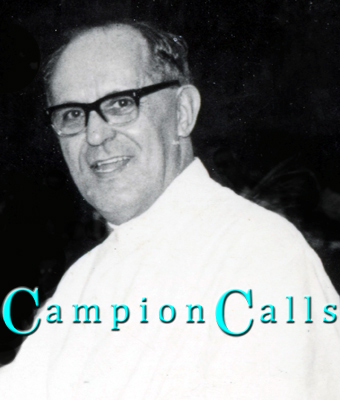 Fr Francis Ribot SJ, took over the school in 1965. Always brimming with new ideas for the school and its staff, he was the one who proposed the idea of a Staff Welfare Fund and, impressively, got it running in a short time.
His administrative abilities were of a high order.
Fr Francis Ribot SJ, took over the school in 1965. Always brimming with new ideas for the school and its staff, he was the one who proposed the idea of a Staff Welfare Fund and, impressively, got it running in a short time.
His administrative abilities were of a high order.
He did not confine himself to the principal’s chair but walked around the school, keeping an eye on both students and teachers in the classrooms.
He trusted his staff and respected their views, but in his own discreet way, he let them know when they were wrong. Mr. Nash Karanjia cites one example: if by chance Fr. Ribot happened to see a staff member going late to class,
he would raise his left hand and glance at the time on his watch.
Fr. Ribot SJ had a grand plan for Campion—a well-designed school building with a hall and a swimming pool. Unfortunately, he left the shores of India before his dreams could materialize.
The First Indian Principal
Campion School entered a new chapter in 1970 when Fr Hillary Miranda SJ took over the reins as its first Indian principal.
Soft-spoken and mild-mannered, he was nevertheless a man of quiet determination, committed to ensuring that things were done efficiently and well.
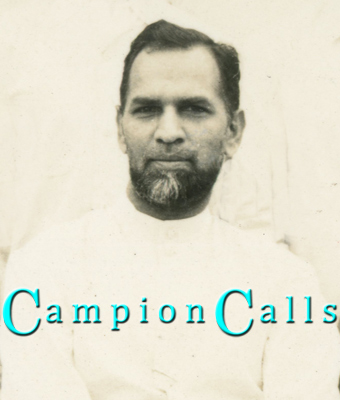 A deeply spiritual priest, Fr Miranda possessed a rare gift for leadership. He knew how to delegate responsibility to the right people, drawing out the best in his staff and students alike.
At the same time, he was generous in giving credit and praise where it was due, fostering a culture of encouragement and mutual respect.
A deeply spiritual priest, Fr Miranda possessed a rare gift for leadership. He knew how to delegate responsibility to the right people, drawing out the best in his staff and students alike.
At the same time, he was generous in giving credit and praise where it was due, fostering a culture of encouragement and mutual respect.
Those who worked with him often recall that his desk was always impeccably clean - not a scrap of paper or a single file left unattended.
He believed in addressing matters immediately rather than allowing them to linger, reflecting his disciplined and decisive approach to administration.
Fr Miranda also left a lasting impact on the school’s culture. He encouraged students to step onto the stage and speak at the morning assembly, nurturing confidence and leadership among the boys.
It was he who initiated the practice of a member from each house addressing the assembly every week - a tradition that strengthened the house system and gave students a regular platform to express themselves.
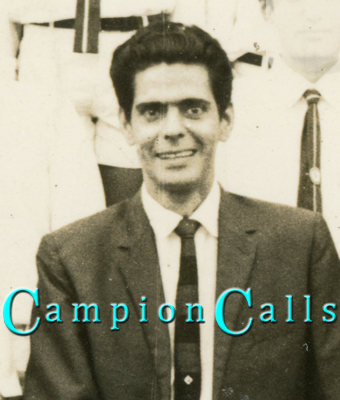 When Fr. Miranda was transferred to St. Stanislaus School in 1972, Mr William McGready who was the Vice-Principal at the time, was appointed Acting Principal.
Mr McGready, an excellent English teacher, was the first lay person to be elevated to the positions of Vice-Principal and Acting Principal.
In 1973, when Mr. McGready accepted the post of Principal at a school in South India, Fr. Daniel Donnelly, SJ, was appointed Principal of Campion School.
The Irishman Who Wore Many Hats
Fr Daniel Donnelly SJ was an elderly Jesuit veteran whose remarkable life of service spanned continents.
Over the years, he ministered and worked in the Netherlands, Austria, Rome, China, Hong Kong, and in several institutions across India.
Among his assignments in India was a notable stint as Principal of St. Mary’s School, Mazagaon
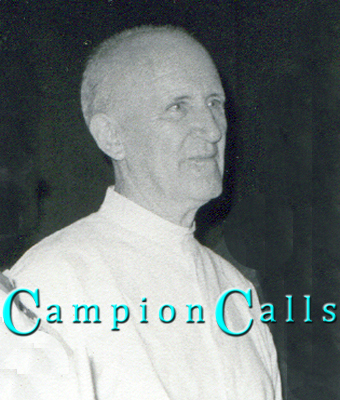 With an MSc in Science and a strong command of English prose and poetry, he brought depth and structure to the daily morning assembly, encouraging students to reflect and think more broadly
Among his lasting contributions was the establishment of the Rink Hockey Court in the school’s back garden — the first of its kind in Maharashtra.
A recognized authority on hockey, he was instrumental in fostering the growth of the sport at the school level and instilling in students the values of discipline and sportsmanship.
Fr Donelly also possessed a deep knowledge of thoroughbred horses and was widely respected for his discerning judgment.
Many sought his counsel at the annual auction sales of the Royal Western India Turf Club, where his expertise and integrity were held in high regard.
After a short stint in Campion he was replaced by Fr Alban D’Mello SJ
Discipline, Rigour, and Academic Precision
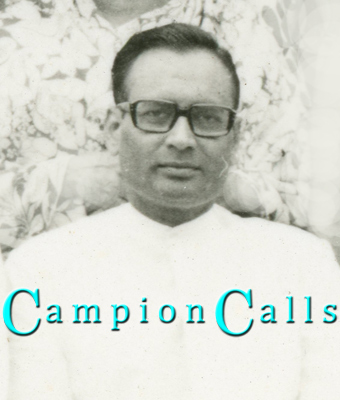 Fr Alban D'Mello SJ was a man of absolutes - black and white, with no grey areas in his world.
He was an exceptionally able administrator, a firm believer in hard work, and a strict disciplinarian. Delays, poor organisation, and inefficiency were things he simply could not tolerate.
Fr Alban D'Mello SJ was a man of absolutes - black and white, with no grey areas in his world.
He was an exceptionally able administrator, a firm believer in hard work, and a strict disciplinarian. Delays, poor organisation, and inefficiency were things he simply could not tolerate.
Though deeply inclined toward academics — which he gave the highest priority - he never undermined the importance of extra-curricular activities.
In fact, it was during his tenure that Campion produced some of its finest athletes and sportsmen, a testament to his belief in all-round development.
Fr D'Mello SJ reorganised the entire examination system - reports, grading, and the promotion structure - bringing clarity and rigour to the process. He kept the staff vigilant and
constantly on their toes, while ensuring that students were disciplined, well-mannered, and neatly dressed.
At the start of our final year, he devoted more than an hour to explaining, with remarkable patience and precision, how we should plan our studies so that the entire syllabus would be
completed - and thoroughly revised - a full two weeks before the board examinations began.
At the time, we listened with the casual indifference of youth, convinced that there was still plenty of time and that such meticulous planning was unnecessary.
We mistook foresight for fussiness and discipline for exaggeration.
Only later, when deadlines loomed and anxiety replaced our earlier confidence, did we begin to grasp the wisdom behind his counsel.
In hindsight, his advice was not merely about examinations but about the quiet power of preparation, the value of time, and the peace that comes from disciplined effort.
Experience taught us what youthful arrogance had dismissed: that wisdom often speaks softly, and it is only with maturity that we truly learn to listen.
The Campion I Remember
My association with Campion began long before I wore its uniform. In the mid-1960s, as a small boy I accompanied my parents to Campion to watch my elder brothers march in the Parents’ Day parade.
 That casual connection became permanent when I was admitted to the school in 1967
Class I was then housed on the ground floor of Arthur House in what is now the Art Room. In those days it was simply our classroom - a bright and ordered world presided over by Ms. Ruby Goes and Ms. Miriam Aranha, who introduced us not only to alphabets and numerals but to the rhythms of school life. Across the courtyard, in Wellesley House, stood the canteen - a treasure trove of culinary delights - scones, patties, samosas and little packets of OK Wafers, Coca Cola – all within 25p!
The space between the two buildings was then an open courtyard; the Tagore Hall was built much later. A garage stood between the buildings and provided perfect cover for games of cops and robbers. Both short and long break assemblies were conducted in this open space. During the monsoon, a makeshift bamboo-and-tin walkway connected the two buildings, protecting us from the rain. Even that temporary passage had its own charm, the sound of raindrops drumming on tin roof accompanying our hurried footsteps.
But the true heart of Campion life was the Backgarden It was here that every Campionite’s day began and ended — morning assembly at the start, and a quick game of hockey, football, volleyball, basketball at day’s close.
 At the morning assembly the ritual seldom varied. Mr Jamshed Hodiwalla’s voice would cut through the chatter:
“At ease, all of you.” After a measured pause came the sharper command - “Tenshun!” - and then the first lines of the national anthem.
Mondays and Fridays reserved for announcements by the Principal. On the other days,representatives of the three houses
addressed us, their speeches alternately informative, humorous, topical ….
Assembly concluded with the Prayer Before Class. Think it was the Principal who read it out and we repeated the prayer after him.
At the morning assembly the ritual seldom varied. Mr Jamshed Hodiwalla’s voice would cut through the chatter:
“At ease, all of you.” After a measured pause came the sharper command - “Tenshun!” - and then the first lines of the national anthem.
Mondays and Fridays reserved for announcements by the Principal. On the other days,representatives of the three houses
addressed us, their speeches alternately informative, humorous, topical ….
Assembly concluded with the Prayer Before Class. Think it was the Principal who read it out and we repeated the prayer after him.
When Fr Francis Bernard SJ conducted the assembly he preferred his own compositions, each closing with words that still resonate in memory: “To You we glory for ever and ever. Amen.”
The Backgarden possessed a character entirely its own. Entering from the gate between the two buildings, two tall palm trees stood directly ahead. They served as our natural goalposts for football and in later years, as backrest for our game of kitty-kitty -
 until the game was eventually banned. Midway between the gate and the palms stood a perpetually leaking tap that was uses by the mali to water the ground. Its spreading puddle
creating a treacherous wet patch that was the undoing of many a footballer who went slip-sliding away.
until the game was eventually banned. Midway between the gate and the palms stood a perpetually leaking tap that was uses by the mali to water the ground. Its spreading puddle
creating a treacherous wet patch that was the undoing of many a footballer who went slip-sliding away.
To the right of the palms were two cannons, relics from the British era when the YMCA building had served as an army establishment and the Backgarden had been known as Wellington Garden, an army parade ground. By unwritten tradition, the cannons belonged to the senior class. Further to the right, near the exit that led toward Fort Convent School, stood a towering swing, a slide, and parallel bars fashioned from sturdy iron.
Throughout the day, the Backgarden hummed with activity - hockey sticks clashing, basketballs bouncing, volleyballs;arcing through the air, "paaaass" yelled at extreme decibels during football games and inevitably, the cries of “kitty-kitty coming!” echoing across the grounds. It was a place of scraped knees and triumphant goals, of friendships forged in competition and laughter.
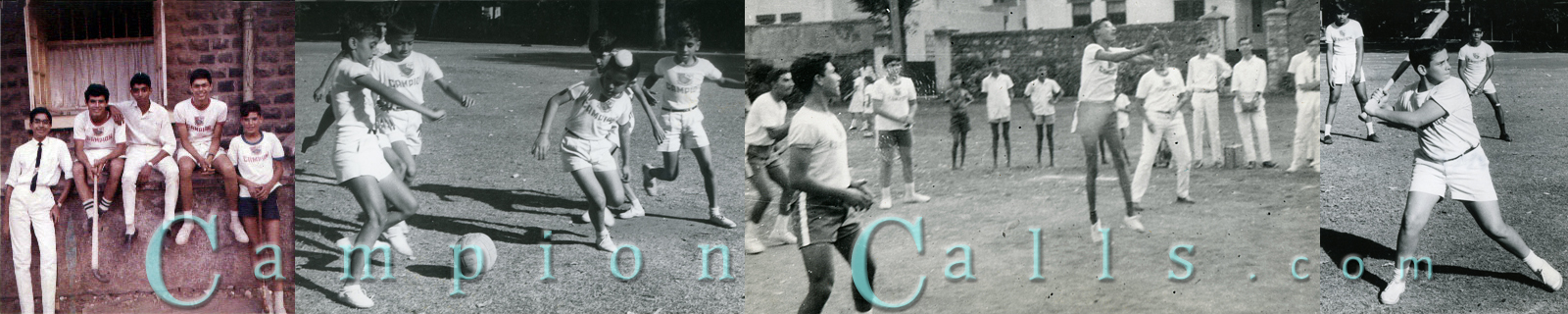
More than 80 years later, Campion continues to flourish, consistently ranked among the finest boys’ day schools in India. Its students excel not only in sport but in a wide array of co-curricular pursuits.
But statistics and rankings, impressive though they are, tell only part of the story.
The true measure of Campion lies in the memories it plants, the character it forms and those undying bonds of friendship it forges. For those of us who walked its courtyards, darted across its monsoon walkways, went slip sliding away in the wet Backgarden and stood to attention beneath the morning sky, the spirit of Campion endures
Rooted in tradition, yet always striving forward, it remains what it has always been: not merely a school, but a formative chapter in the lives of its boys - a place where discipline met play, where history met youthful imagination.
And where a little boy once watched his brothers march, unaware that he too would one day carry that rhythm within him for life.